
Winterizing Your Garage Door Before the Southtowns Freeze Sets In
The single best thing you can do for your garage door before a West Seneca winter is lubricate every moving metal part with a cold-rated silicone or lithium grease. That one job prevents more cold-weather breakdowns than anything else on this list. The exceptions are doors with visibly rusted springs, openers more than ten years old, or tracks that have shifted from a settling slab — those need a closer look before you grease anything, because lubrication won't fix a part that's already failing.
Why Buffalo-Area Winters Are Hard on Garage Doors
It's not just the cold. It's the freeze-thaw cycle that runs all winter long — a 40-degree afternoon followed by a 15-degree night, over and over, for months. That cycle works on concrete slabs, track brackets, and weatherstripping in ways a steady deep freeze never would. Add in road salt tracked in on tires and boots, humid summers that leave hardware primed to rust once the salt hits it, and the occasional nor'easter that buries the driveway overnight, and you've got a system that's genuinely harder on garage doors than most of the country sees. A lot of homes in this area still have their original door and opener from whenever the house was built, which means older hardware that was never built with today's insulation standards or corrosion coatings in mind.
Lubrication: The One Job You Can't Skip
Cold makes grease stiffen and thin oils evaporate faster, which is why a door that worked fine in October starts groaning, sticking, or running slower by December. Before the hard freezes arrive:
- Apply silicone or lithium-based grease to the hinges, rollers (if they're metal, not nylon), and the torsion spring itself.
- Wipe down and lightly oil the track-side of the rollers, not the track itself — grease on the track collects grit and ice.
- Skip WD-40 as a long-term lubricant. It's a solvent and degreaser first; it'll clean a part but won't protect it through a cold snap.
- Do this before temperatures are reliably below freezing, since grease spreads and penetrates better when it's not already stiff.
Check the Springs Before the Cold Sets In
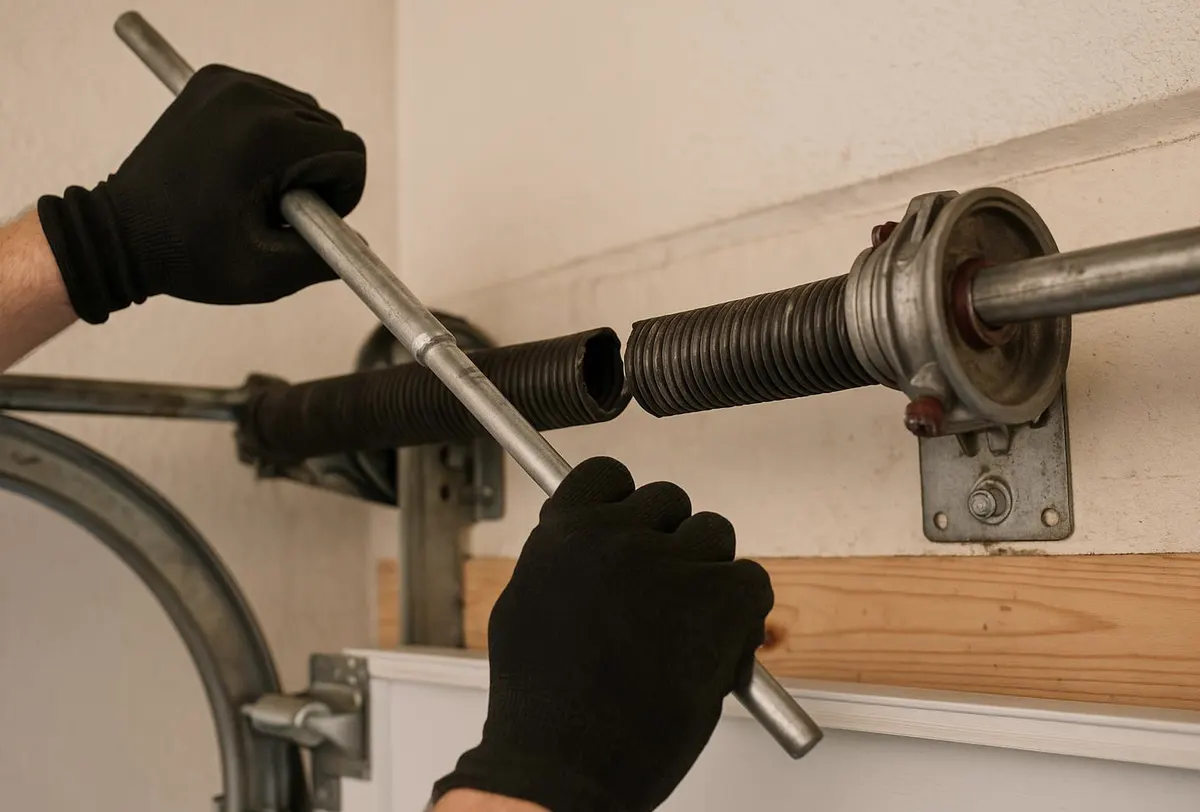
Steel gets more brittle as it gets colder, and torsion springs are already under enormous tension even on a mild day. A spring with a hairline crack or visible rust pitting that survives October can snap in a January cold snap when the metal contracts. Warning signs worth acting on now: a door that feels heavier than usual when lifted manually, a visible gap in the spring coil, or a loud bang from the garage that wasn't an opener issue. If your door is more than 10-15 years old and the springs have never been replaced, treat this as the season to get them inspected, not the season to find out the hard way.
Protect the Opener and Sensors
Cold weather slows the response time on most chain and belt-drive openers, and extreme cold can shorten the life of the opener's battery backup if it has one. The photo-eye safety sensors near the bottom of the track are also worth a look — road salt spray and slush kicked up by car tires cake onto the sensor lenses, and a dirty or misaligned sensor will stop the door from closing at all, usually at the worst possible moment. Wipe the sensor lenses clean, confirm both indicator lights are solid (not blinking), and if you have a battery backup unit, test it now rather than during the first real snowstorm.
Inspect Tracks and Rollers for Freeze-Thaw Heaving
Concrete slabs in this climate shift slightly as the ground freezes and thaws underneath them, and that movement can nudge a garage door track out of alignment over a season or two. A door that rubs on one side, rattles unevenly, or seems to bind partway through its travel is often a track problem rather than an opener problem. Rollers take a beating too — steel rollers exposed to salt and moisture rust and seize up, which puts extra strain on the opener motor. If you can see surface rust on the rollers or hear a grinding sound as the door moves, that's worth fixing before winter, not after.
Weatherproofing Older Doors
A lot of the housing stock in this part of the state still has original steel doors without a thermal break or foam core, which means the door itself conducts cold straight into the garage. If your garage shares a wall with living space, or you use the garage as a workshop, that matters for comfort and for pipes. Beyond insulation, check the door panels for small dents or rust spots along the bottom few feet — that's where road salt splashes land all winter, and a small rust spot left alone in November is a hole by March. A coat of rust-inhibiting paint on bare metal now is cheap insurance.
When to Call West Seneca Garage Door
If you've gone through this list and found a spring with visible wear, a track that's noticeably out of alignment, or an opener that's struggling in the cold, that's the point to stop troubleshooting and call in a technician rather than risk a mid-winter breakdown with the car stuck inside. Our Preventive Maintenance visits cover exactly this kind of pre-winter check — springs, rollers, tracks, opener sensors, and hardware — before the freeze-thaw cycle finds the weak point for you. If a spring does need replacing, our Spring Replacement service handles it safely, which isn't a DIY job given the tension involved.
If you're searching for a garage door company near Union Rd or anywhere else in the 14224 area, or you just want your door checked before the first real snowfall, give West Seneca Garage Door a call. We serve West Seneca and the surrounding South Towns, and we'd rather get your door ready now than get your call during a January storm.