
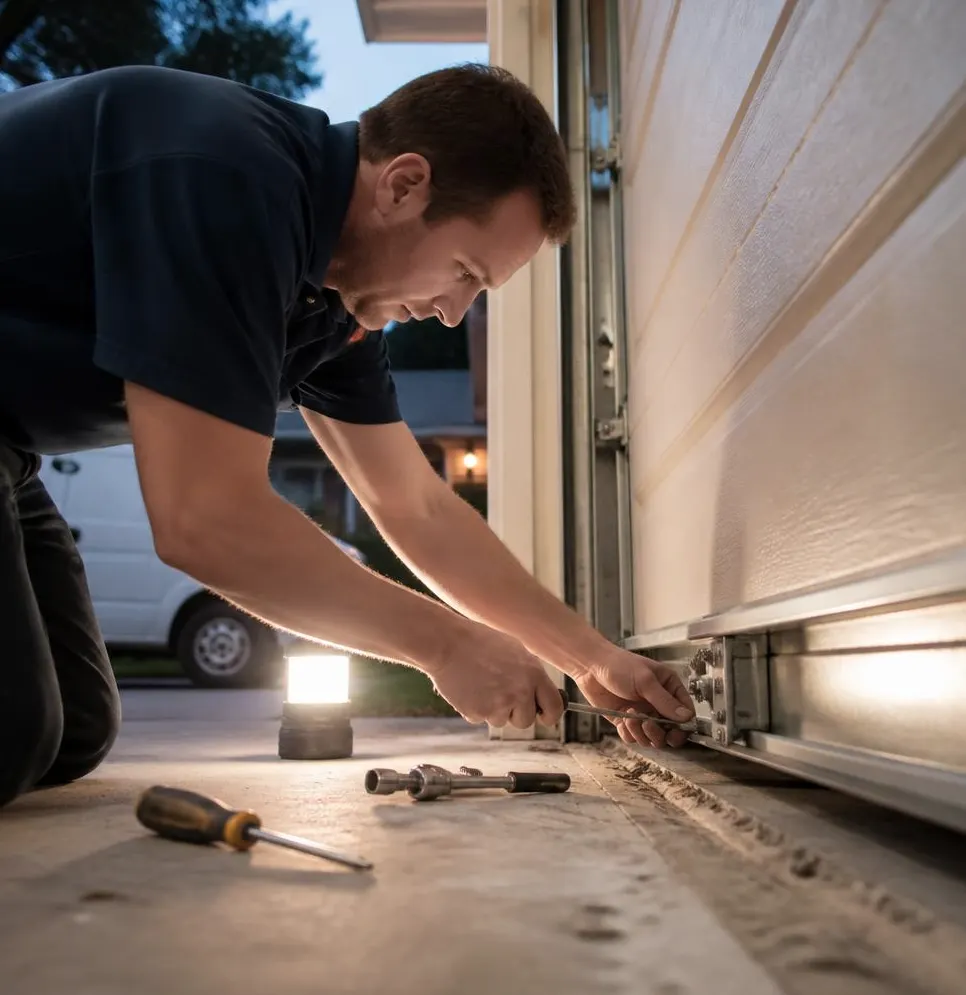
What Another Season of Gaps and Cracked Seals Really Costs You
Ignore a worn bottom seal through one more southtowns winter and here's what you're signing up for: cold air pouring under the door and spiking heating bills, meltwater and road salt slush seeping onto the garage floor where it refreezes overnight, mice and spiders finding a new way in before the first hard freeze, and a fine layer of dust and grit settling over everything you store out there. On older homes with original doors and original weatherstripping, that gap often isn't a hairline — it's wide enough to see daylight through. Fixing it now, before the first real cold snap, is a fraction of the cost of dealing with a frozen, stuck door or water-damaged drywall later.
What Bottom Seals and Weatherstripping Actually Do
The bottom seal (sometimes called an astragal) is the rubber or vinyl strip along the bottom edge of the door that presses against the concrete slab. Side and top weatherstripping lines the jambs and header. Together they're the only thing standing between your garage and wind-driven rain from a nor'easter, meltwater refreeze, and small animals looking for shelter. On older original doors, this material is often original too — dried out, cracked, or flattened from years of freeze-thaw cycling.
Signs Yours Needs Attention
- Daylight visible under the closed door from inside the garage
- A hard, cracked, or flattened bottom seal that no longer flexes
- Water staining or a damp line along the base of the door or nearby wall
- Drafts you can feel standing near the door
- Dust, leaves, or debris that seem to blow in overnight
- Gaps along the sides or top where the door meets the frame
Tools You'll Need
- Tape measure
- Utility knife
- Flathead screwdriver or trim puller
- Replacement bottom seal and retainer track (T-style, bulb, or beaded, matched to your existing track)
- Replacement side and top weatherstripping
- Hammer or rubber mallet (for some retainer styles)
- Work gloves
- Soapy water or silicone spray to help feed the seal into the track
Step-by-Step: Replacing the Bottom Seal
- Close the door and measure the width, buying a seal long enough to span it with a couple extra inches to trim.
- Open the door and locate the retainer track running along the bottom edge of the panel — the existing seal slides into it.
- Pull the old seal out of the track by hand or with a flathead screwdriver if it's brittle and stuck. Clean dried rubber, dirt, and grit out of the channel.
- Trim the new seal to length with a utility knife, cutting it slightly long rather than short.
- Feed the new seal into the track starting at one end. A little soapy water or silicone spray on the bead helps it slide through without tearing.
- Close the door and check contact along the full width — it should press evenly against the slab with no gaps on either end.
Step-by-Step: Replacing Side and Top Weatherstripping
- Measure each jamb and the header separately — they're rarely identical lengths once a door has settled over the years.
- Pry off the old strip with a flathead screwdriver or trim puller, being careful not to gouge the wood or metal underneath.
- Clean the surface so the new strip's flange sits flush and fasteners bite into solid material.
- Tack the new strip in place starting at one corner, keeping it snug against the door panel without crushing the bulb seal.
- Close the door and check for light gaps from inside with the lights off — any daylight shows exactly where it still needs adjustment.
What's a Homeowner Job and What Isn't
Swapping a bottom seal or re-tacking weatherstripping is reasonable weekend work for most homeowners — the parts are inexpensive and the tools are basic. But if the retainer track itself is bent or rusted through, if the door doesn't sit flat on the slab anymore (common on older sectional doors that have racked slightly over time), or if the gap is actually coming from a bowed track, bent hinge, or a panel that's no longer square, that's a structural problem. Forcing a new seal onto a door that isn't sitting right will just wear out again fast, and prying on a track under spring tension without the right setup is genuinely dangerous.
When to Call West Seneca Garage Door
If you've replaced the seal and still get drafts, water, or light gaps, or if the door doesn't close flush on the slab, it's time for a technician. We handle Cable & Track Repair when a bent or misaligned track is the real cause of the gap, and our Preventive Maintenance visits cover a full inspection — seals, rollers, hinges, springs, and opener — so small issues get caught before the first ice storm instead of after. Call West Seneca Garage Door today to get your door sealed up and ready for another Buffalo-area winter.